 LOCK
LOCK


 01
01 03
03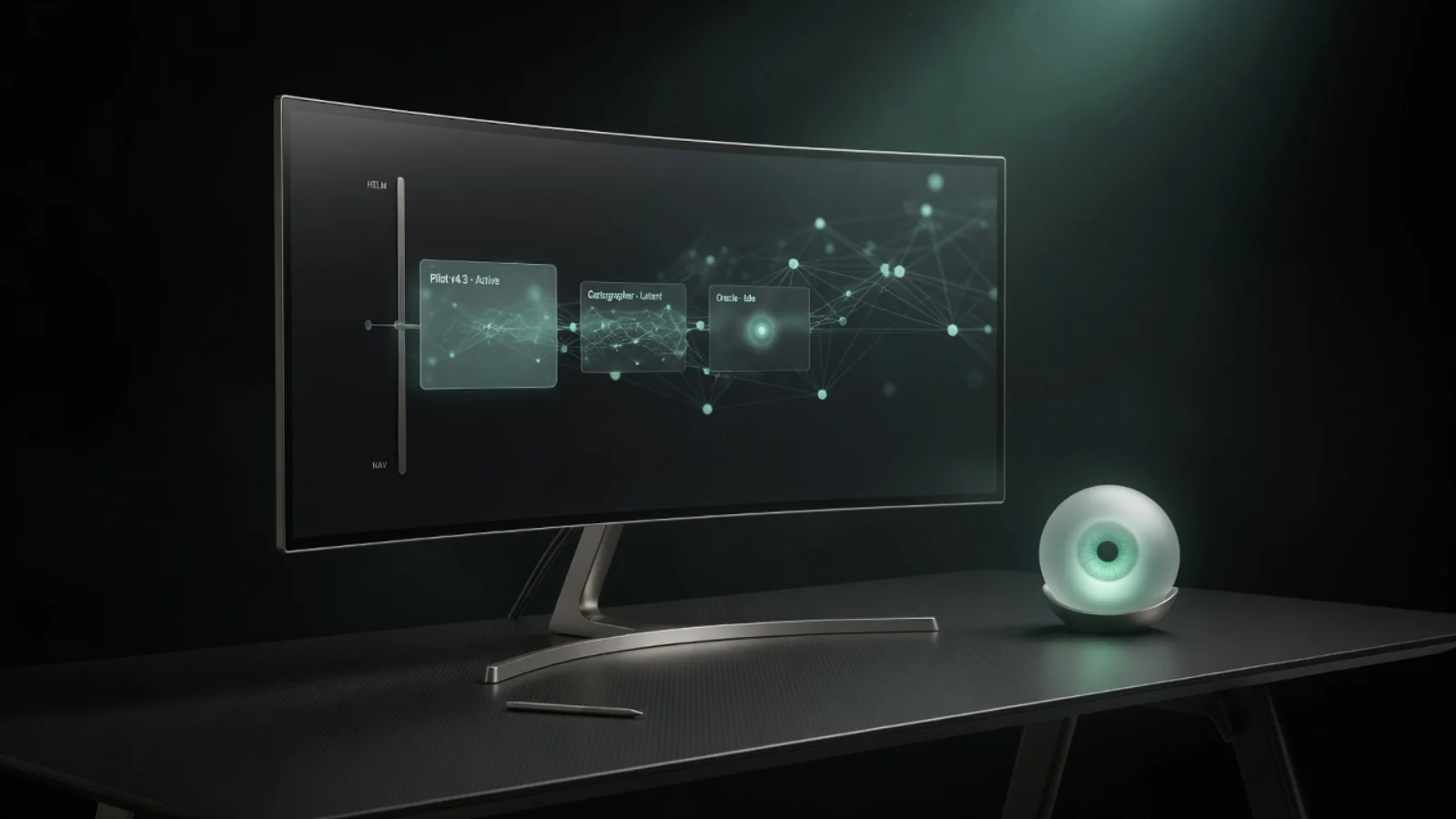 04
04 06
06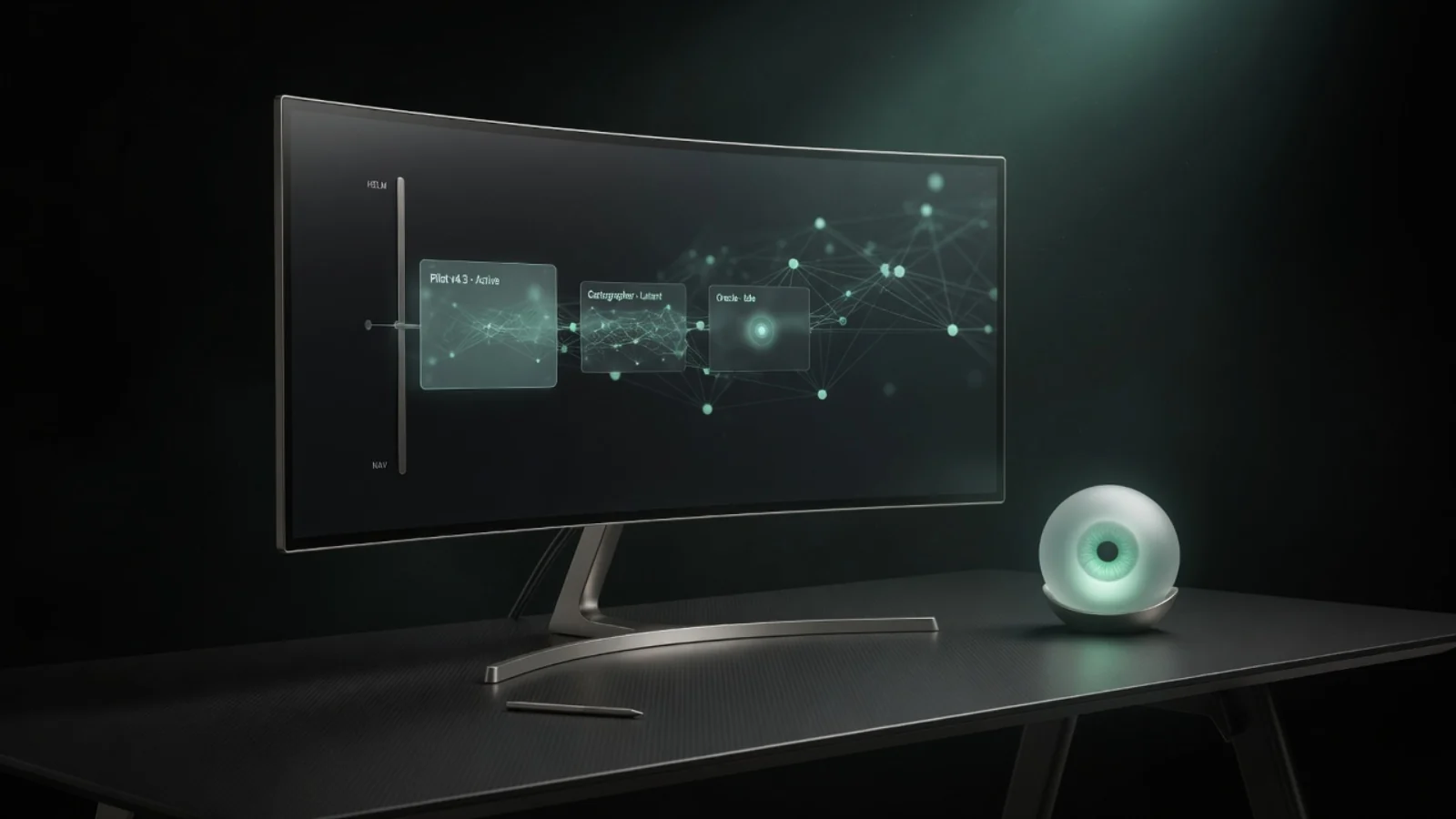 07
07 08
08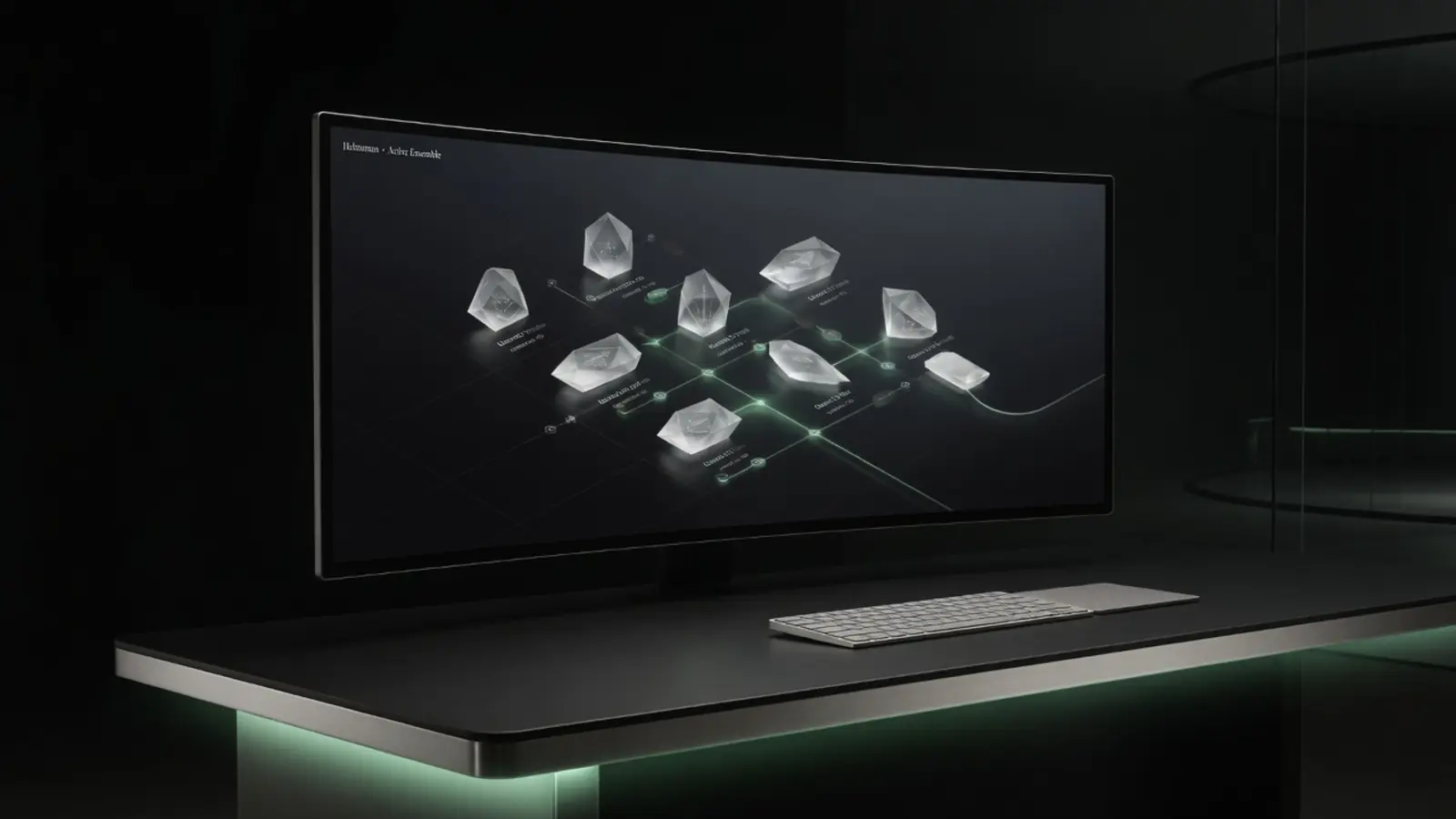 09
09 10
10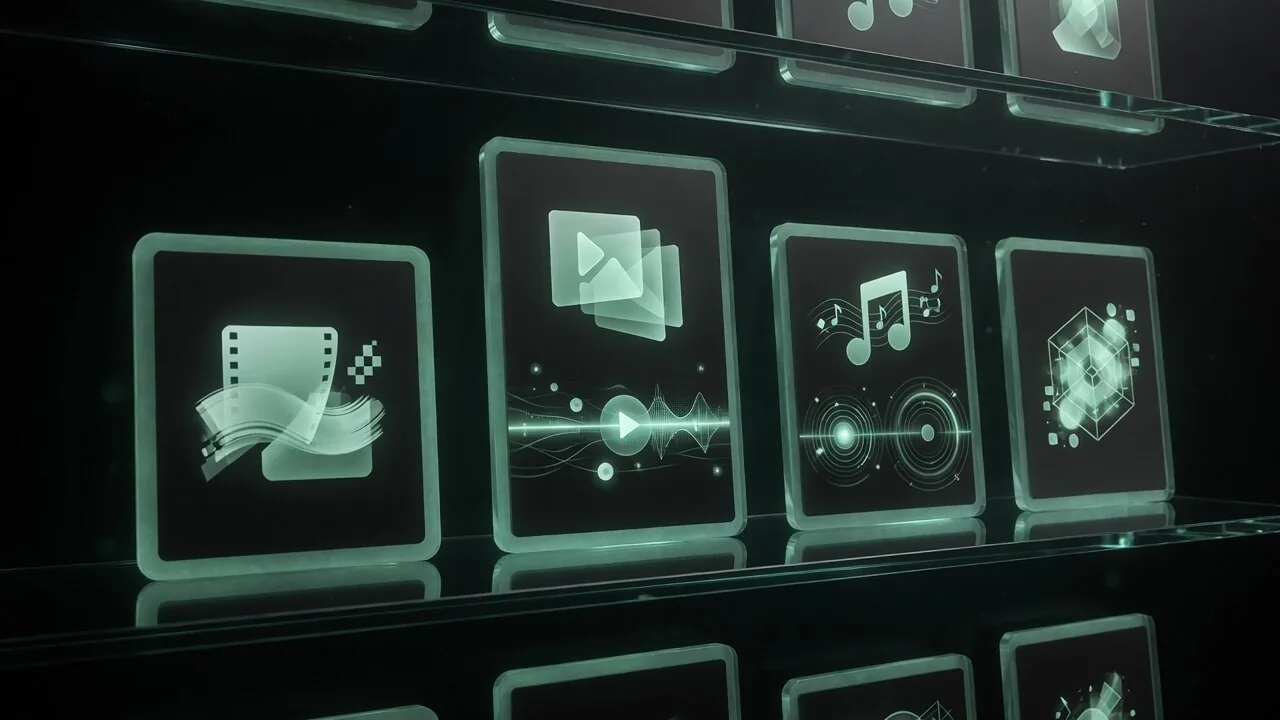 11
11 12
12 13
13 17
17 18
18 20
20One person.One machine.A civilisation.
S◉LOCK was not designed in a boardroom. It grew, decision by decision, inside a lab in Malta — one operator, one machine, and a system that learned to build itself.
A machine too large for the desk it sits on.
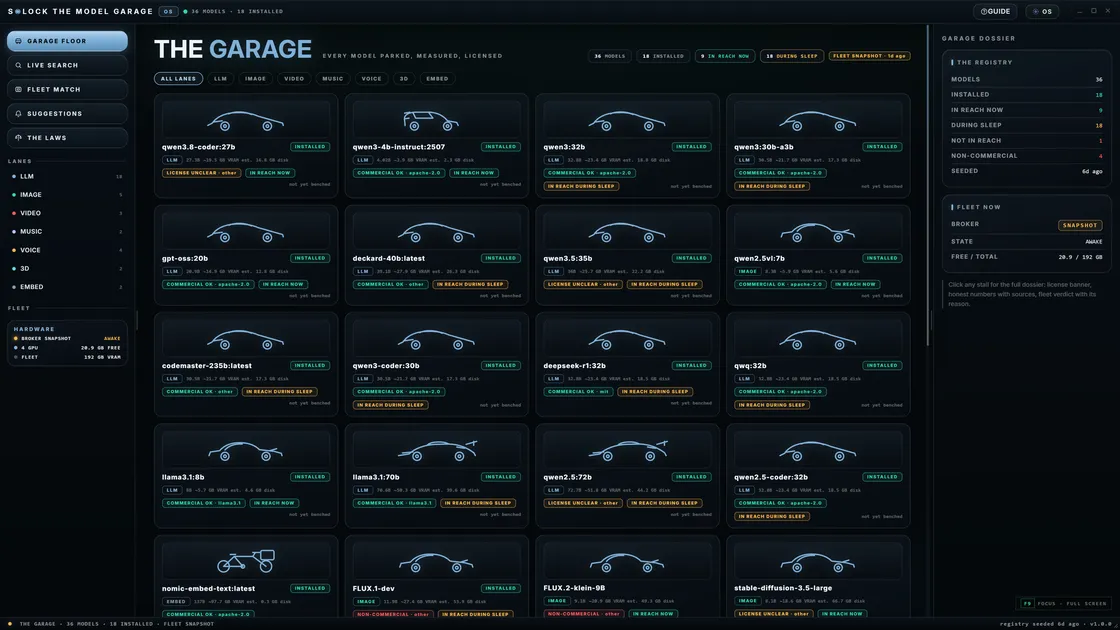
It starts with hardware most companies would rack in a datacentre, installed instead in a room in Malta. 128 cores. Nearly 200 gigabytes of graphics memory. Enough to carry frontier-class open models without asking anyone’s permission.
The first model wakes on-box.
No API key. No usage meter. The first conversation with a mind that lives entirely on owned metal changes what feels possible — and what feels acceptable. Everything after this is a refusal to go back.
Every subscription, cancelled.
Rented intelligence is repossessable intelligence. The lab commits to a rule that sounds extreme until you live with it: if it cannot run here, it does not run at all. The constraint becomes the engine — every missing capability gets built instead of bought.
The system starts building the system.
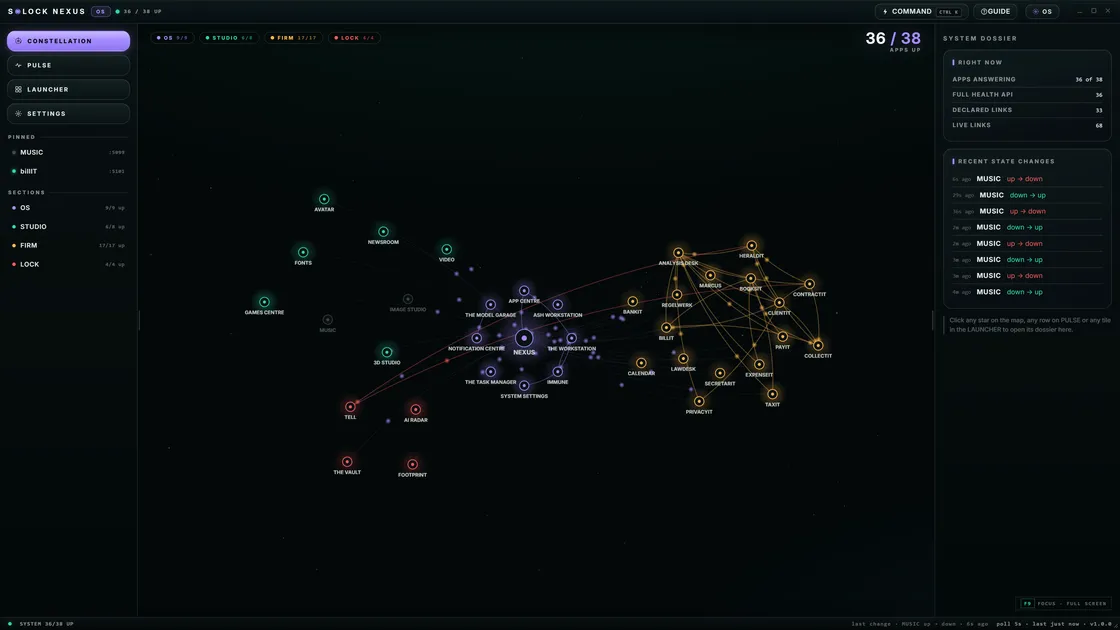
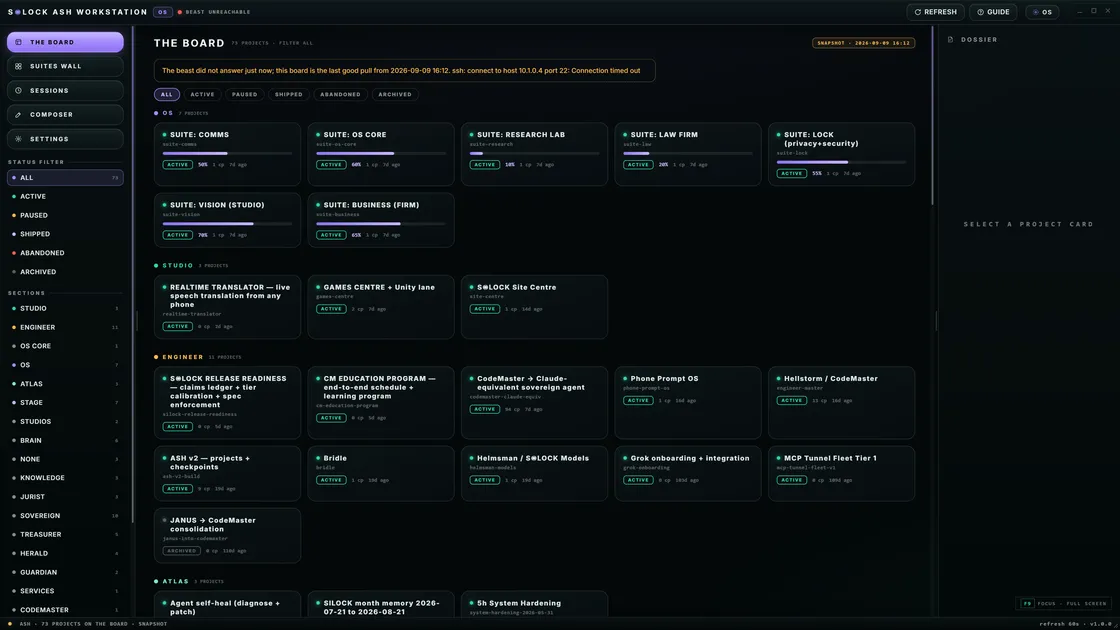
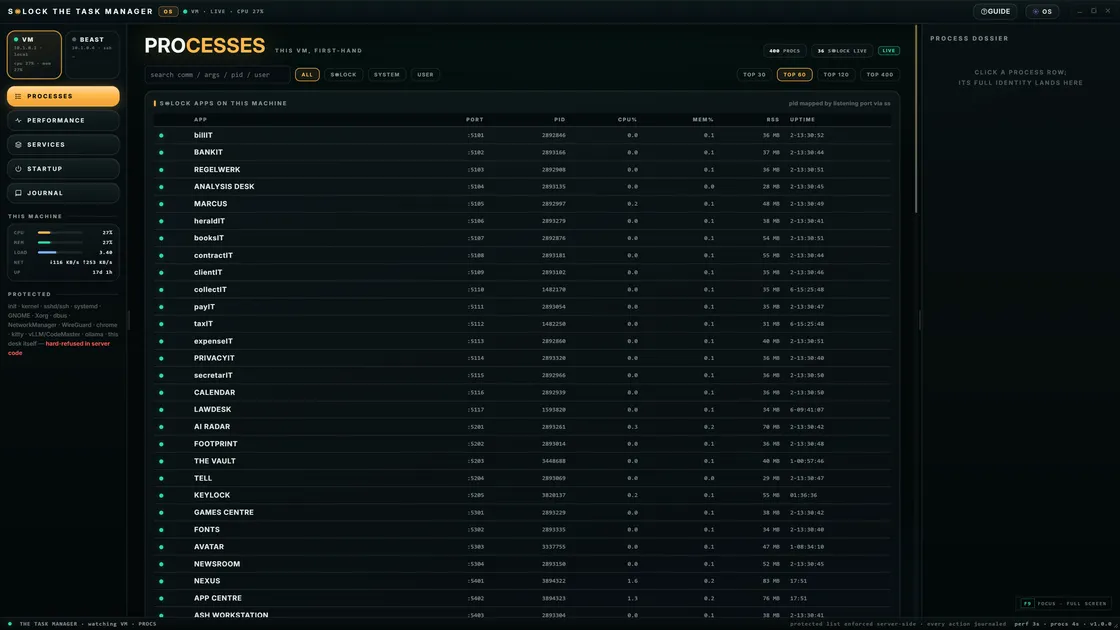
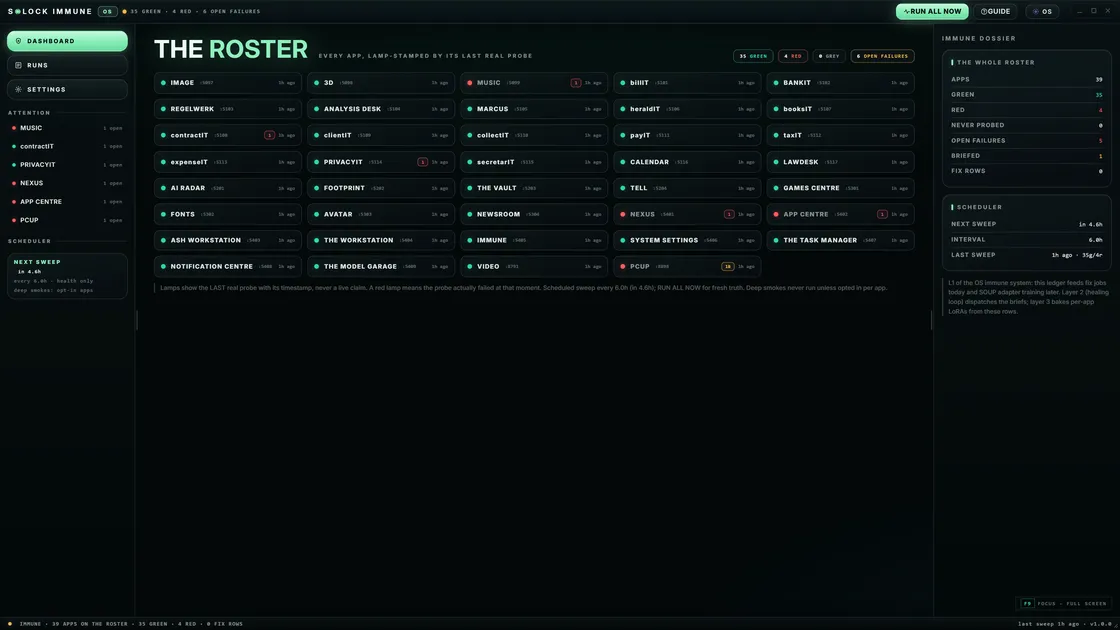
One assistant becomes a workforce. Agents specialise — one watches the hardware, one reads the law, one repairs what breaks at 3am. They are censused like a population, every fifteen minutes, because at this scale you no longer inspect a machine. You govern one.
It begins to remember.
Not chat history — institutional memory. What was tried, what failed, what Vincent prefers, what the law requires. The lab stops repeating its mistakes because the machine keeps the scar tissue.
Three minds argue the architecture.
Every major decision about what S◉LOCK becomes is debated by three independent frontier-class models until they converge — and every verdict carries an acceptance test. Ninety decisions in. Ninety unanimous. Zero unresolved. No committee of humans has that record.
The products leave the lab.
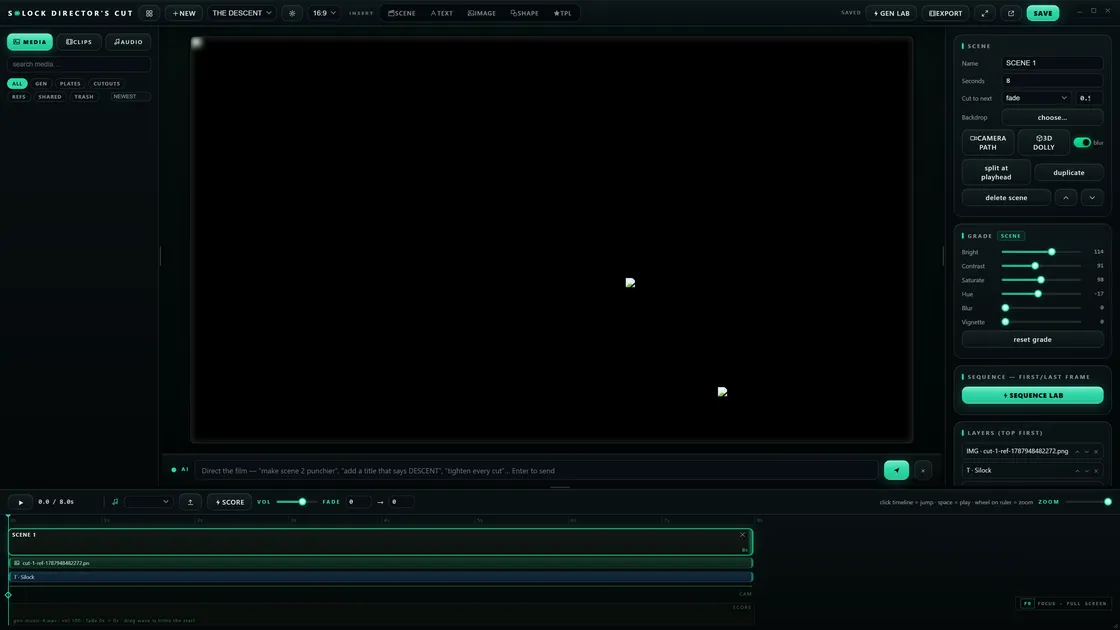
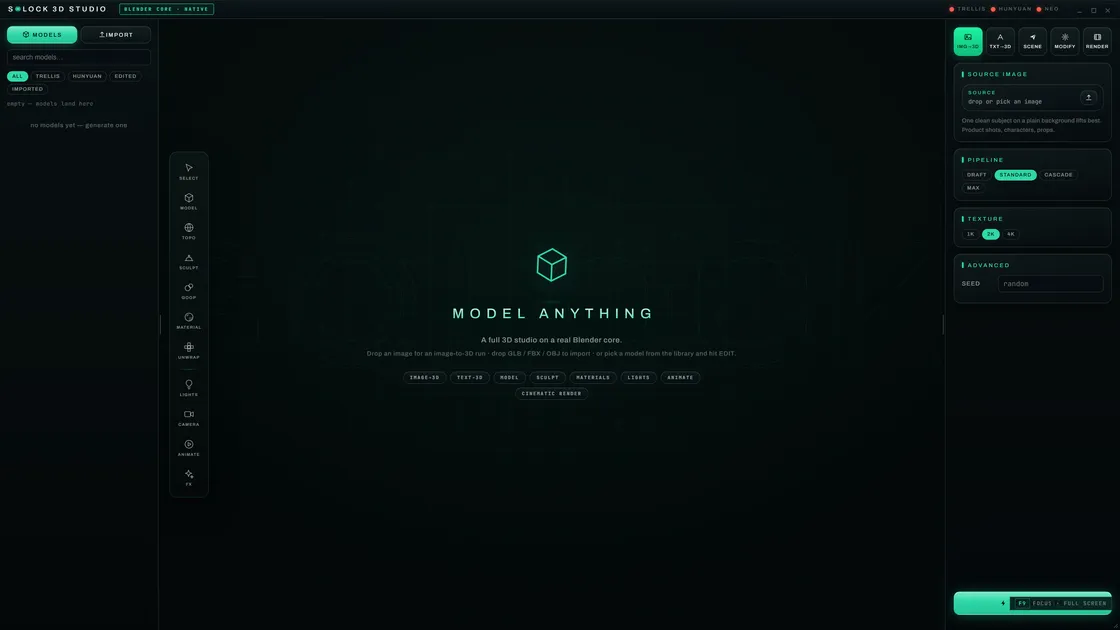
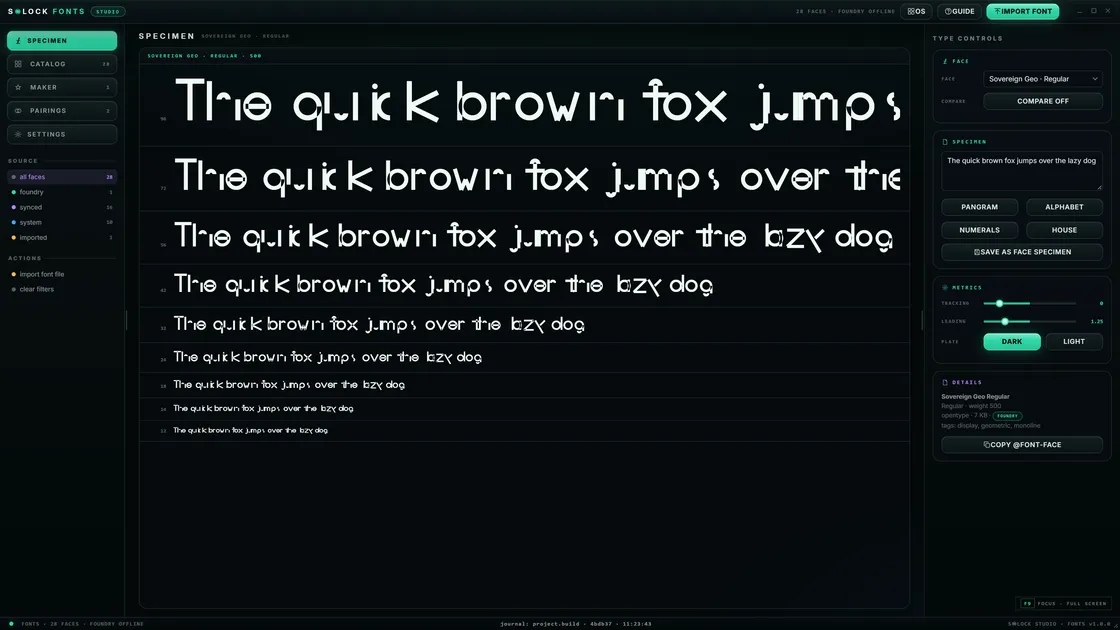
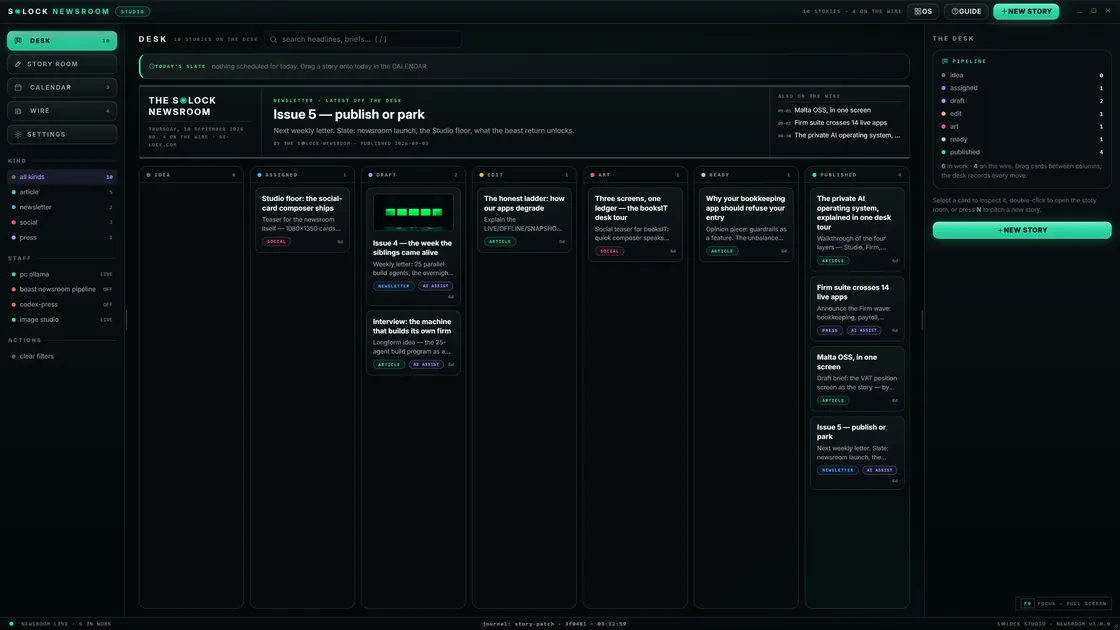
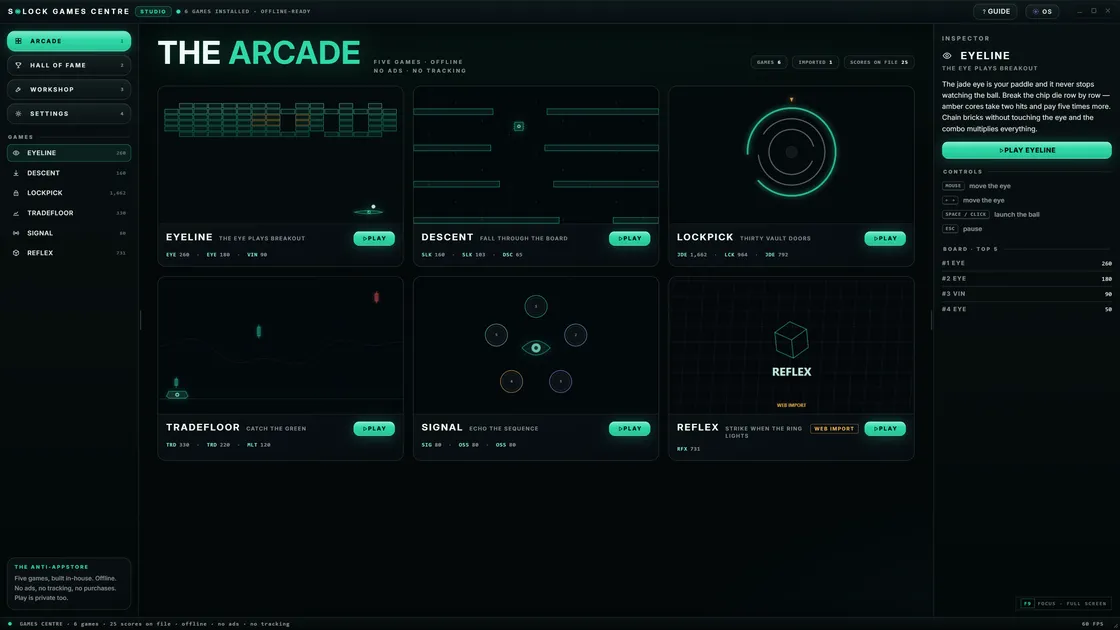
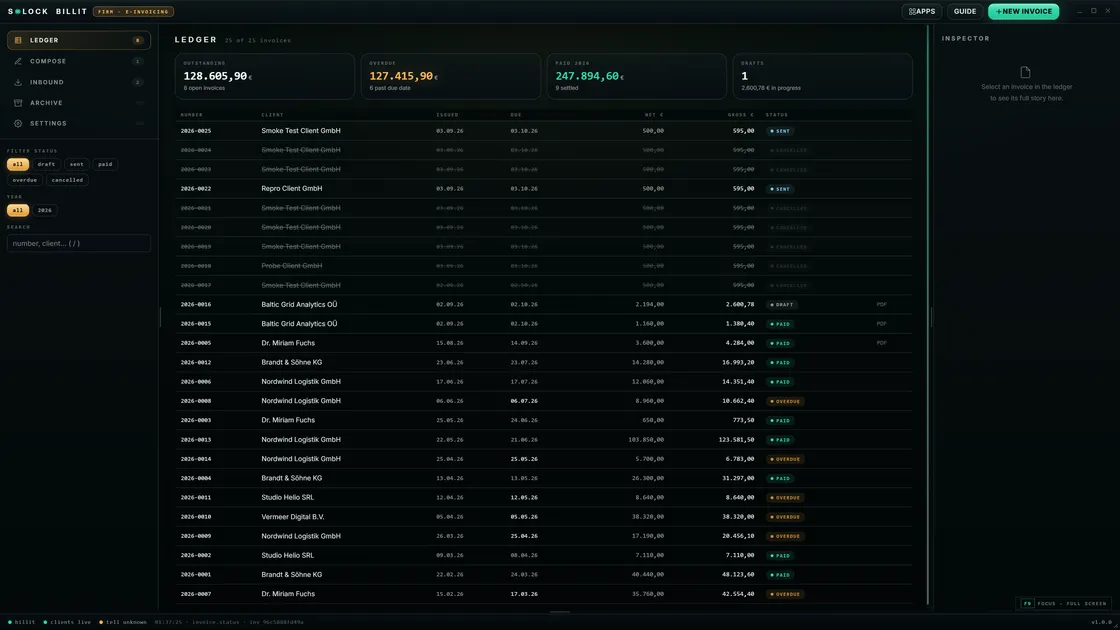
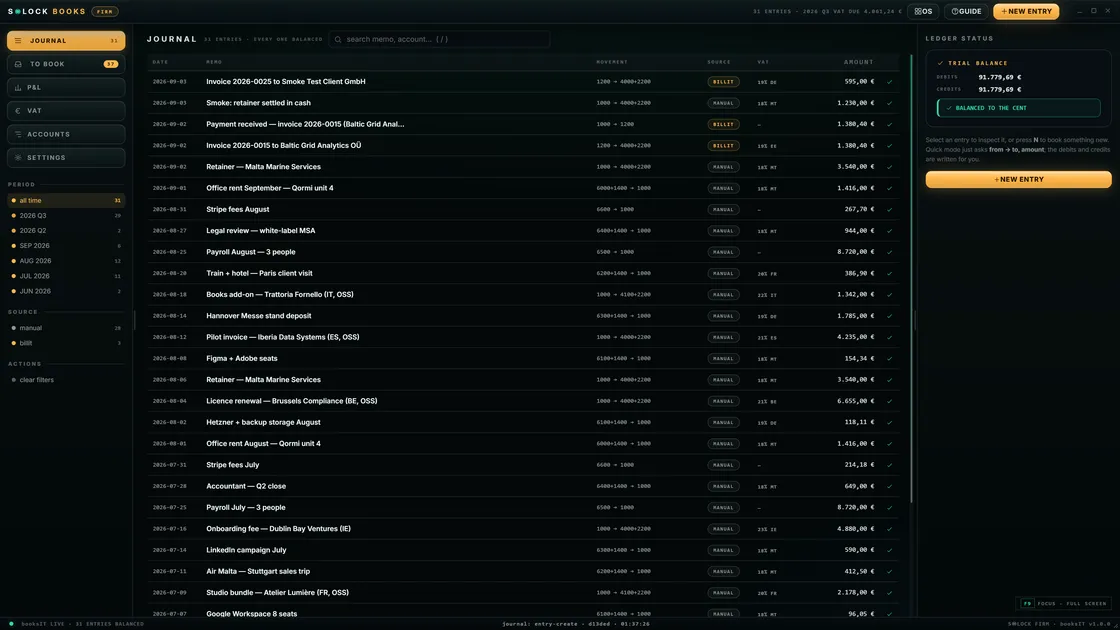
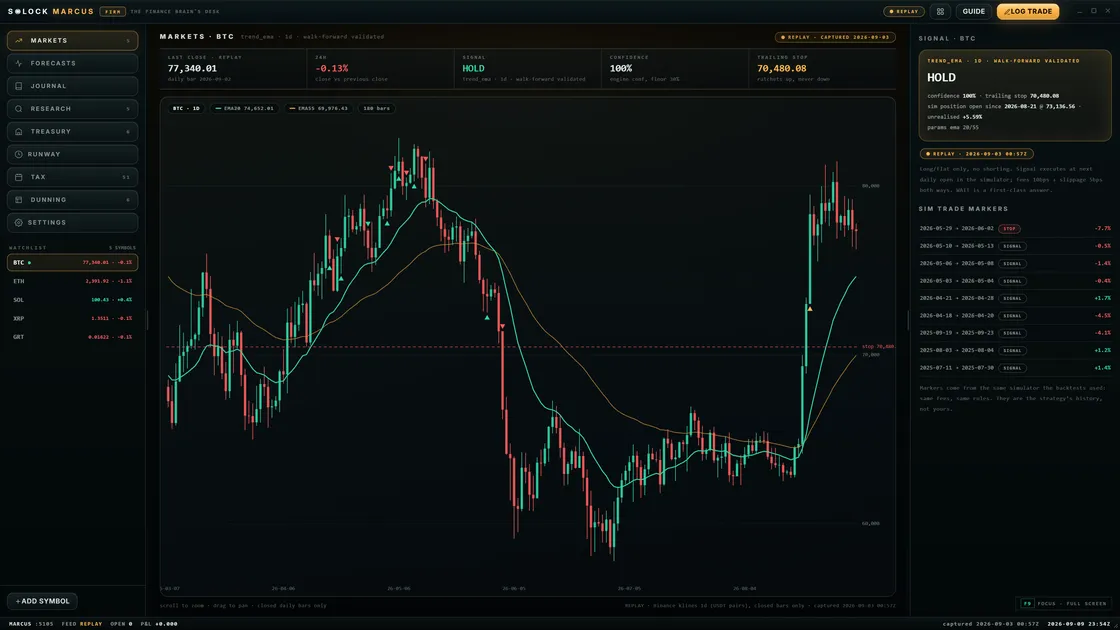
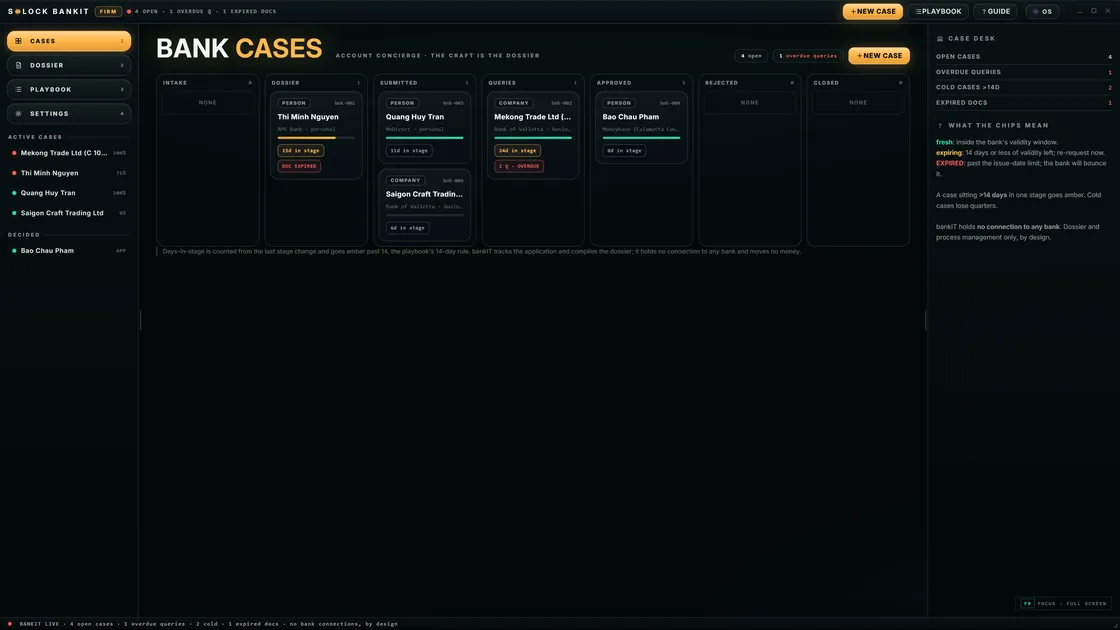
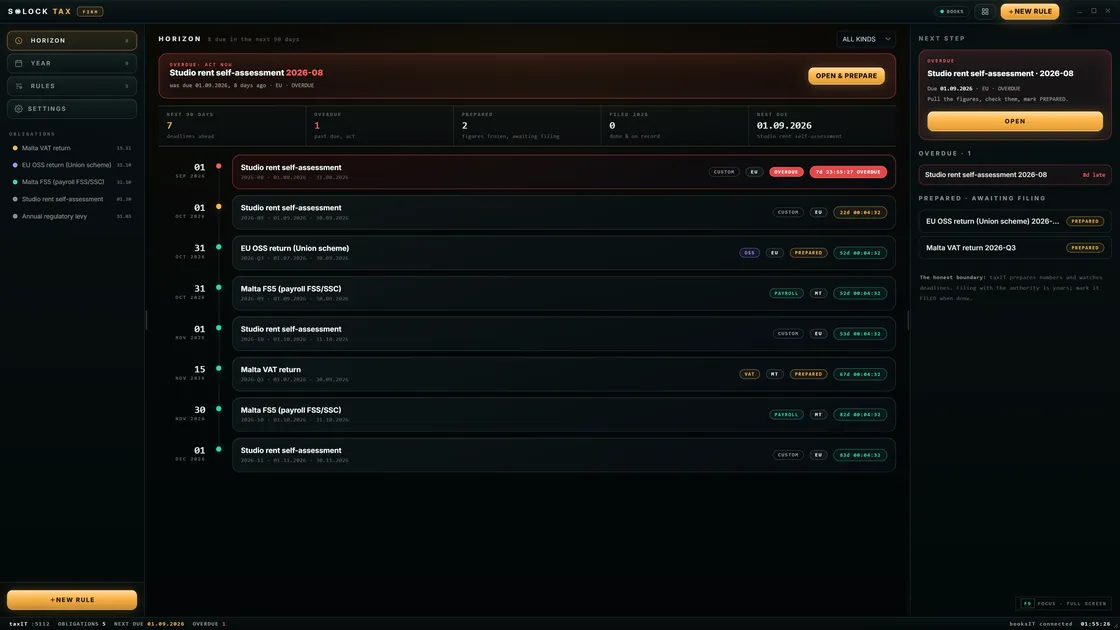
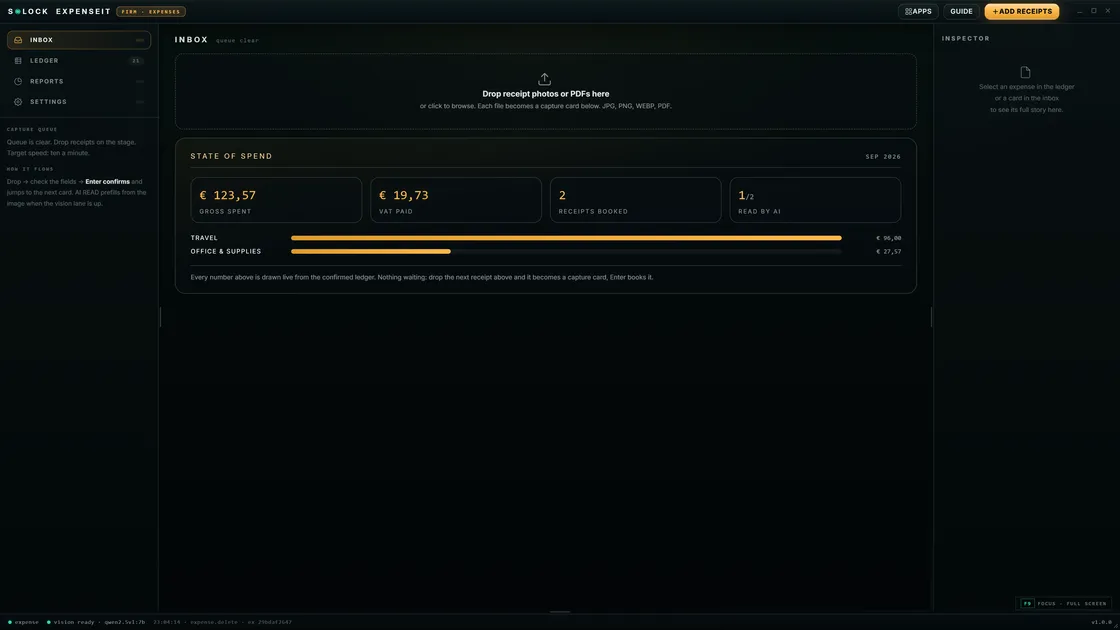
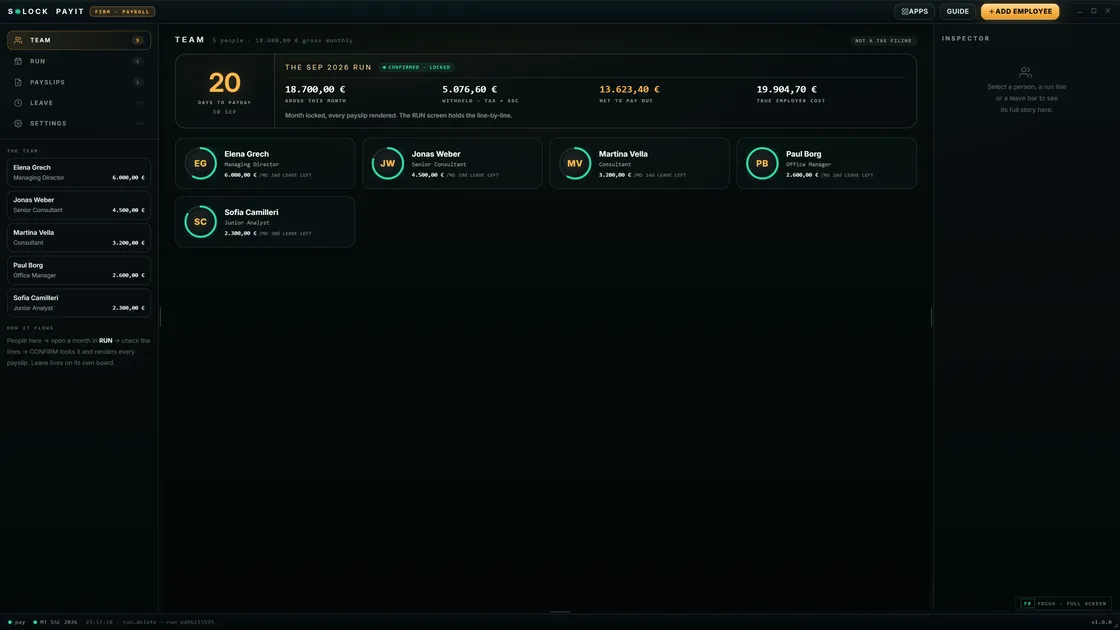
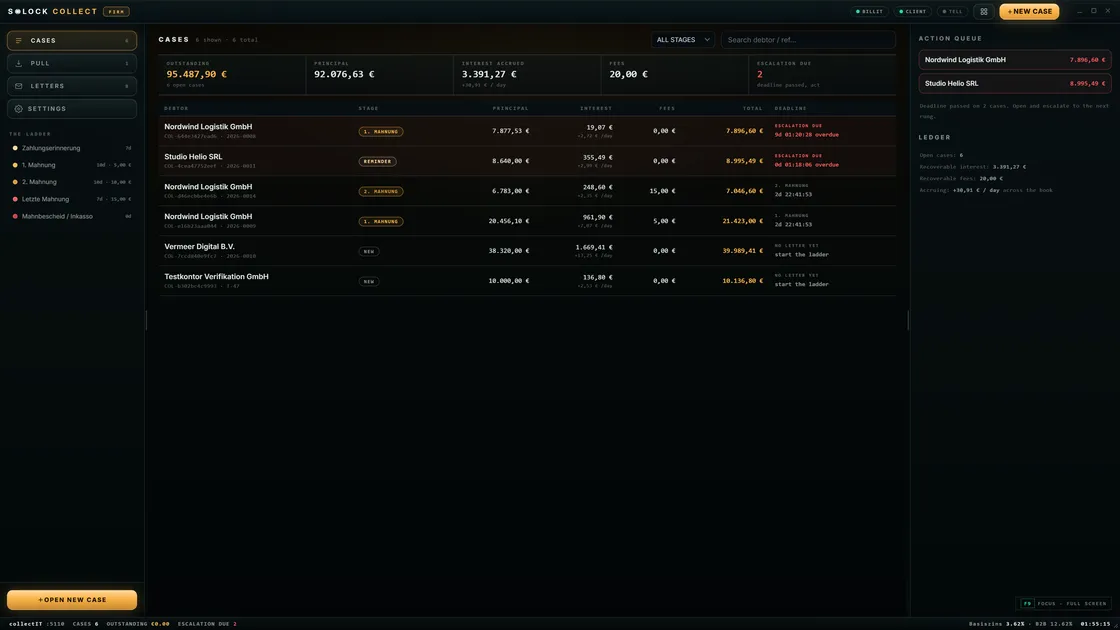
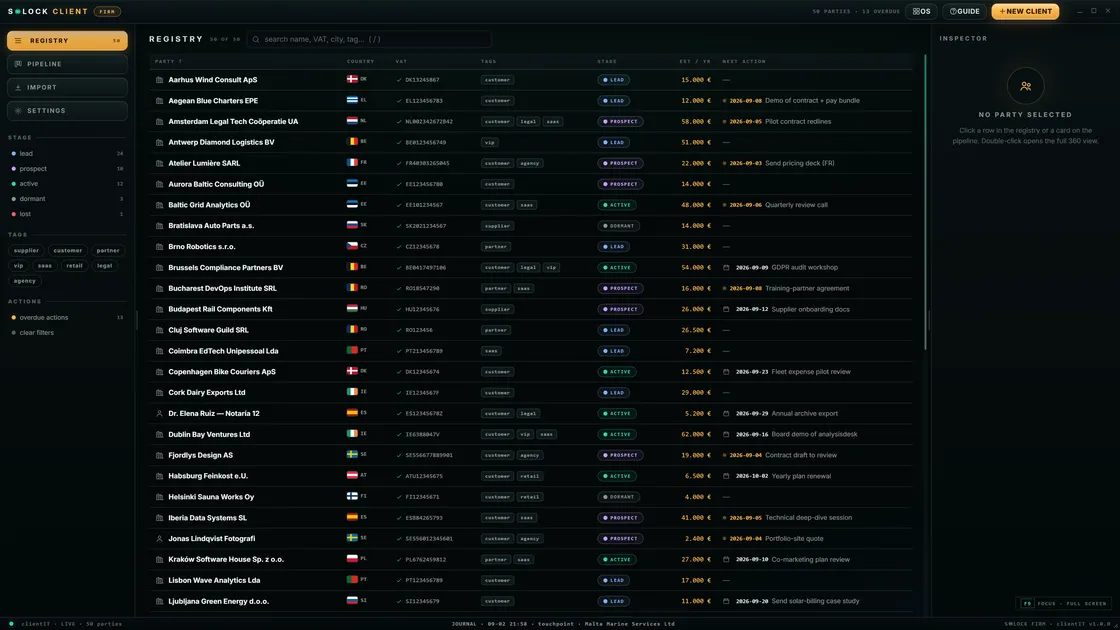
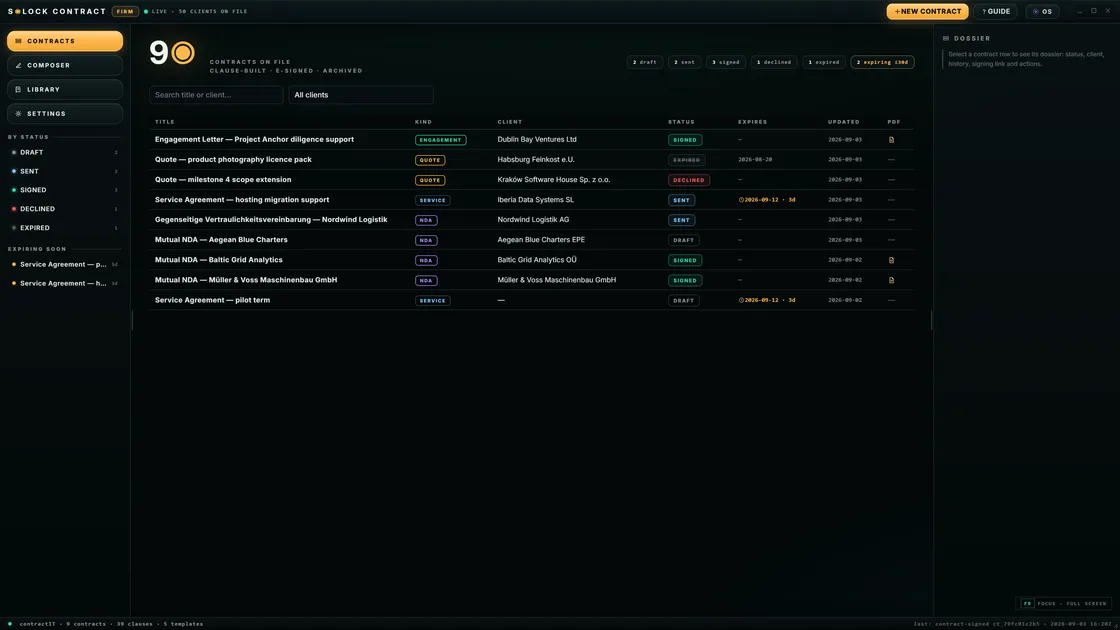
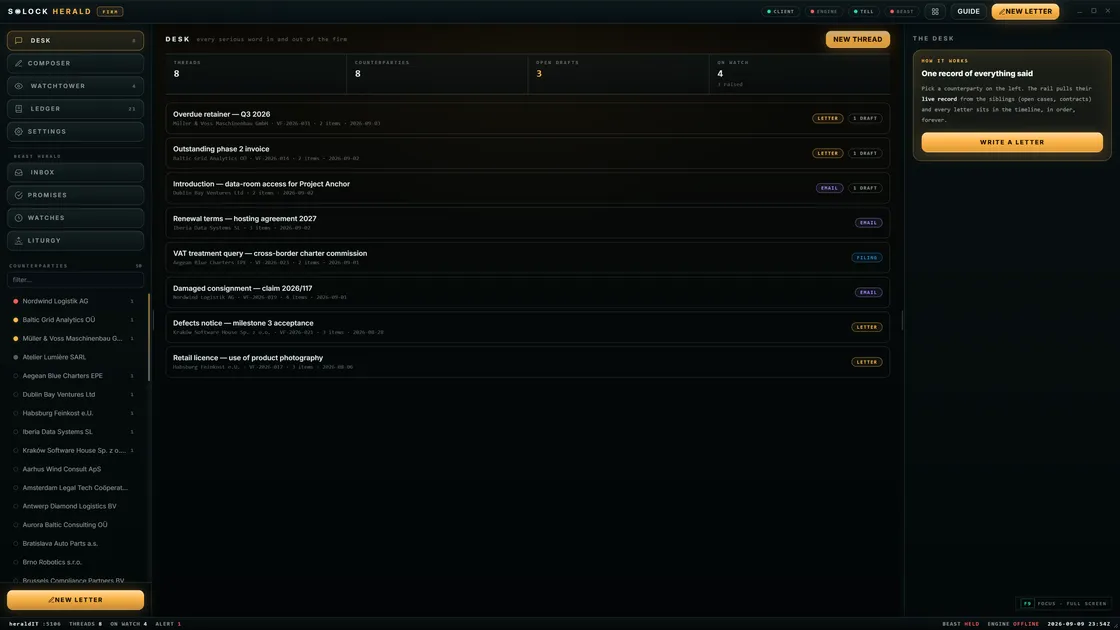
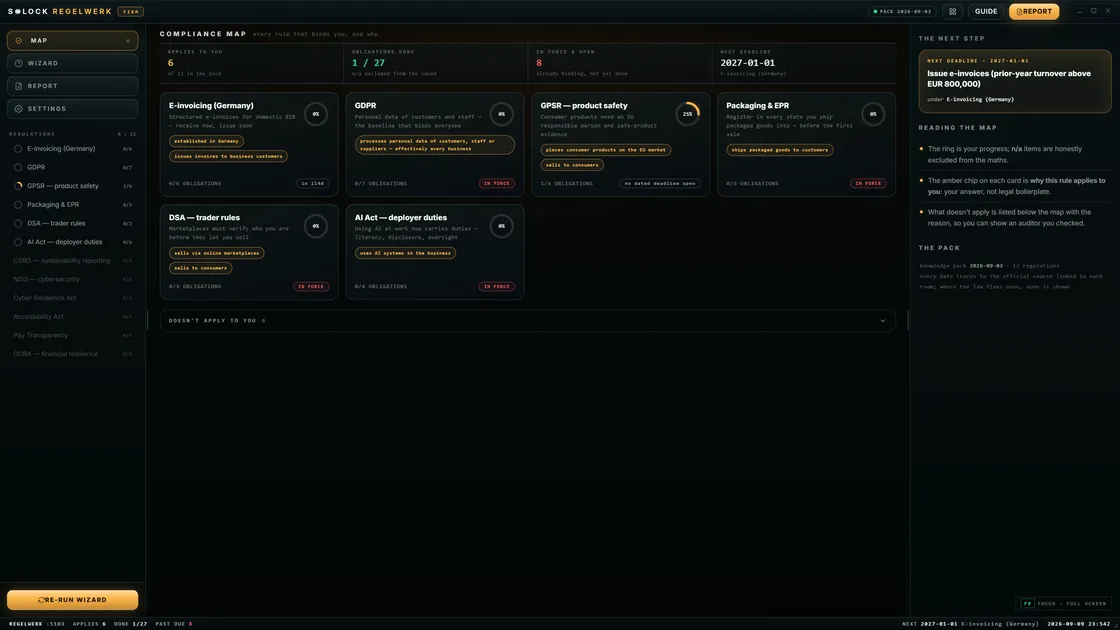
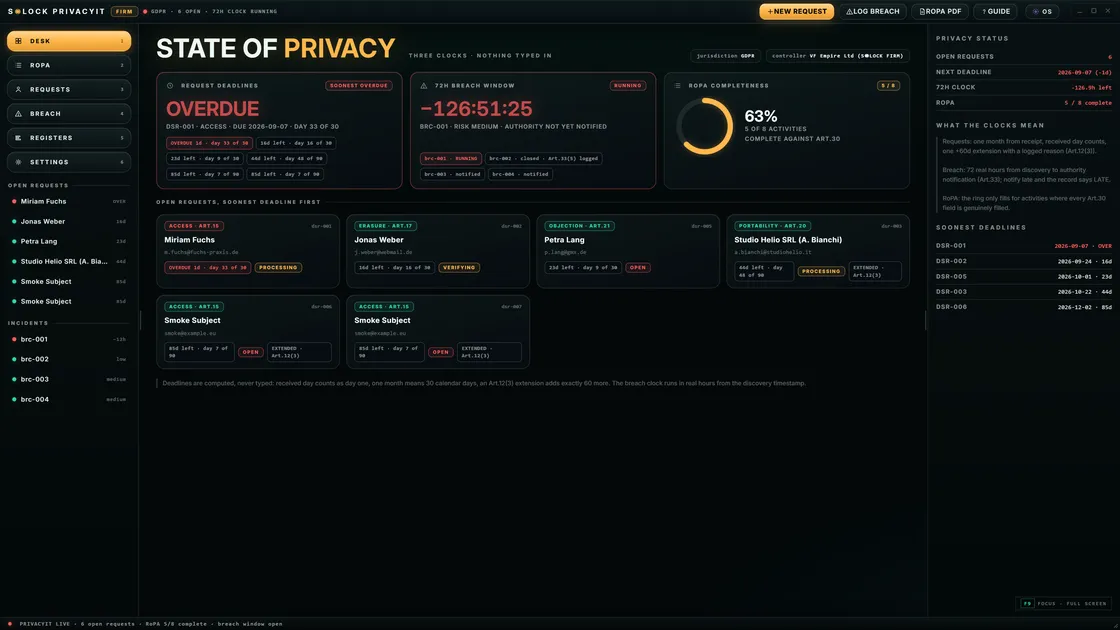
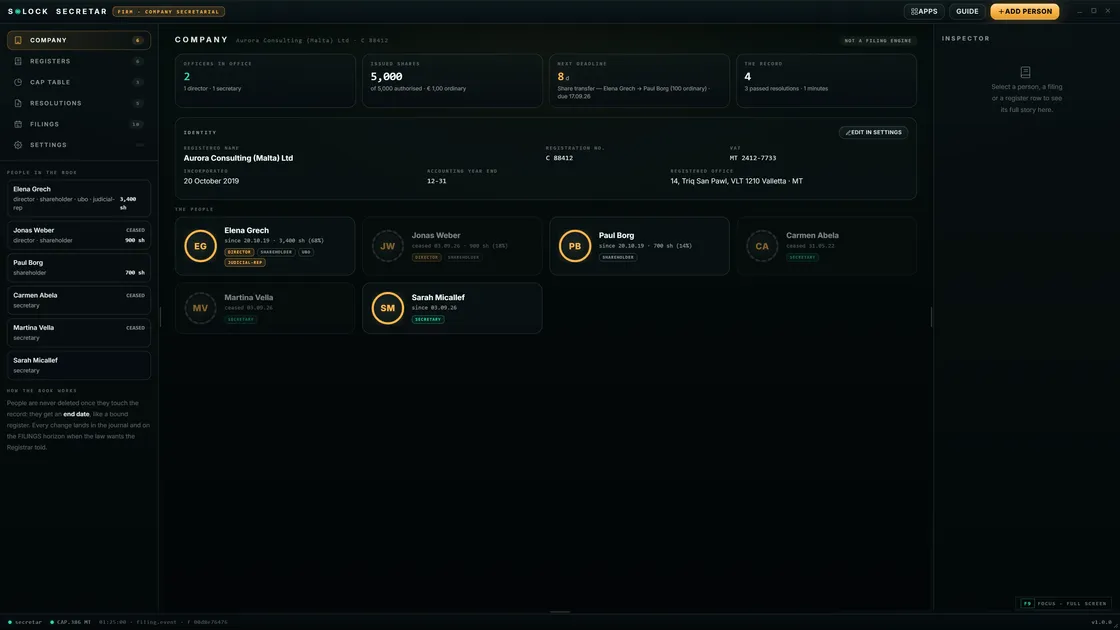
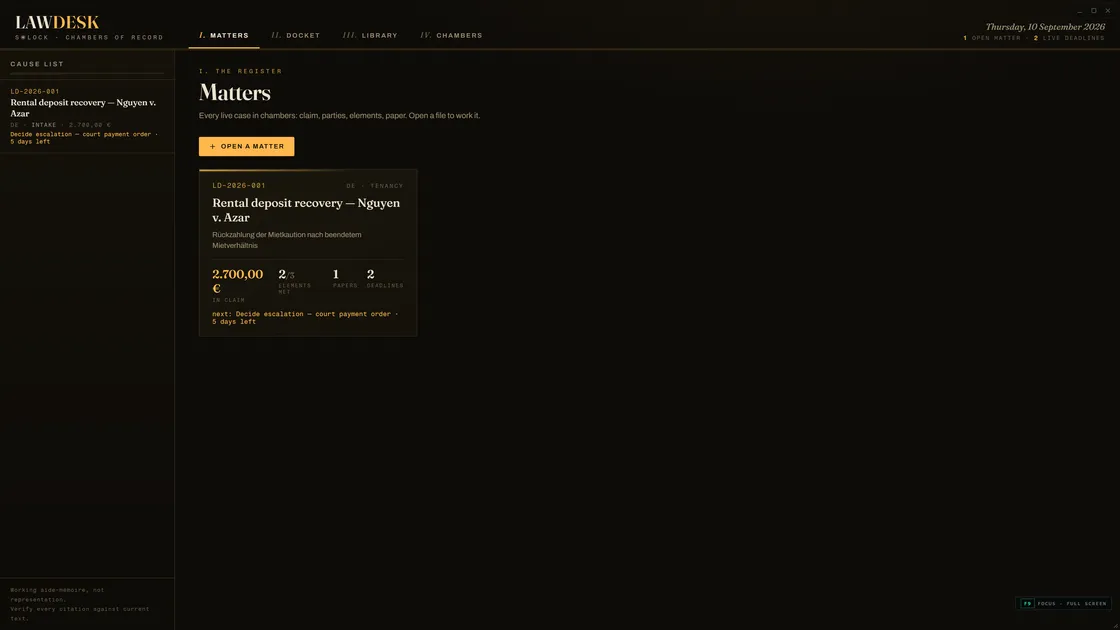
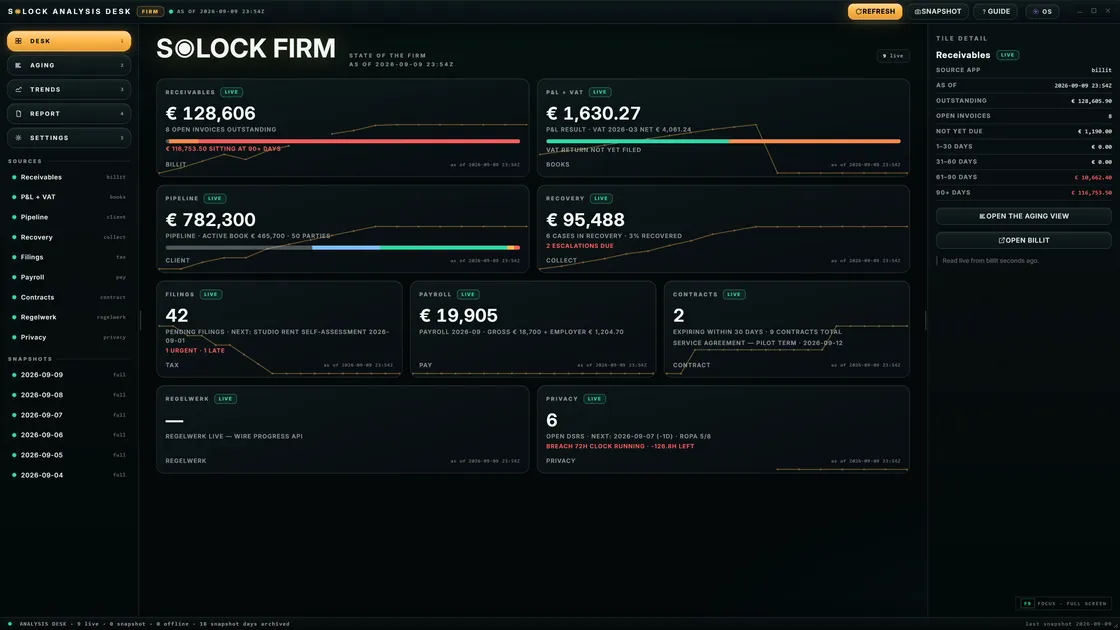
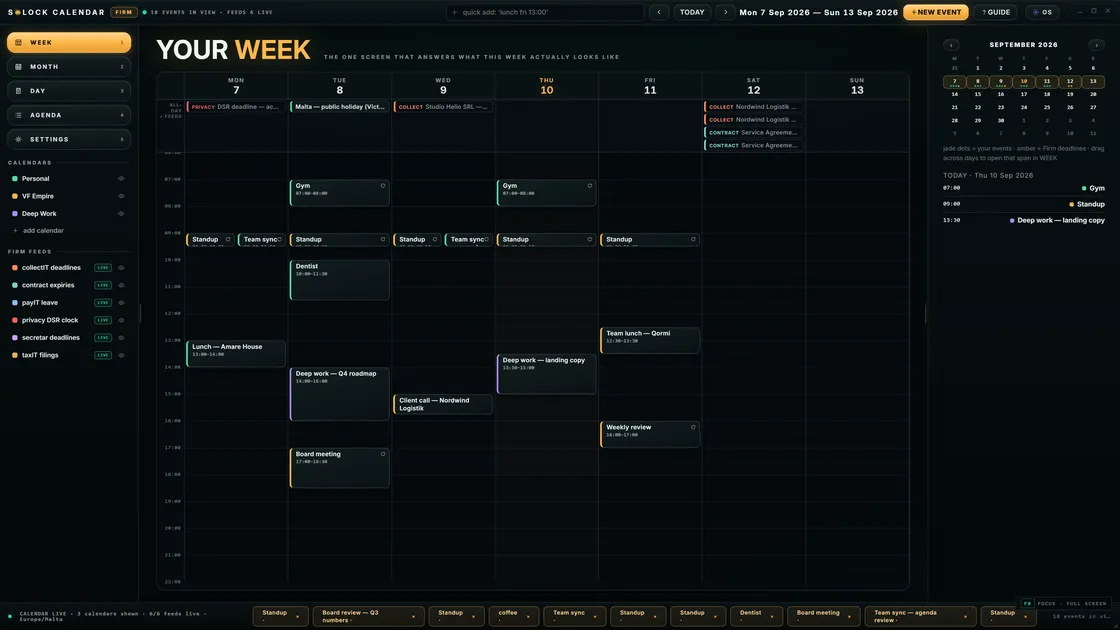
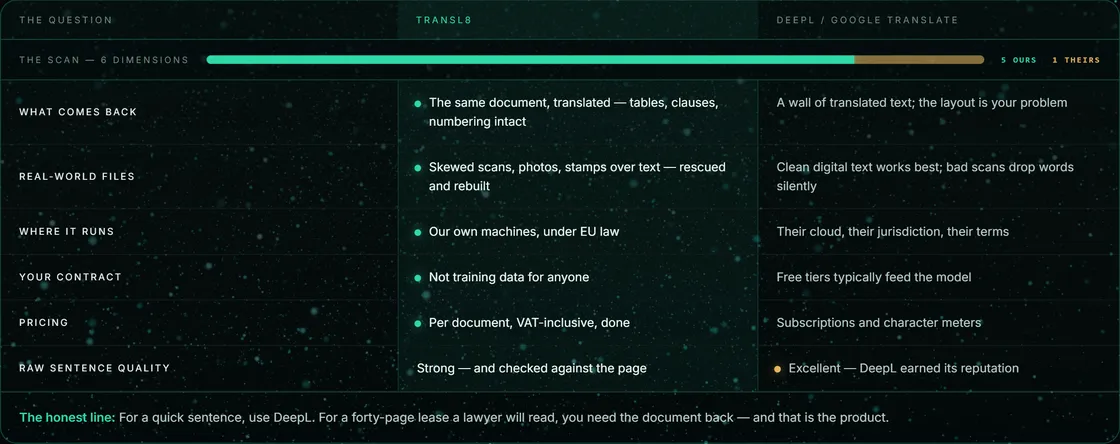
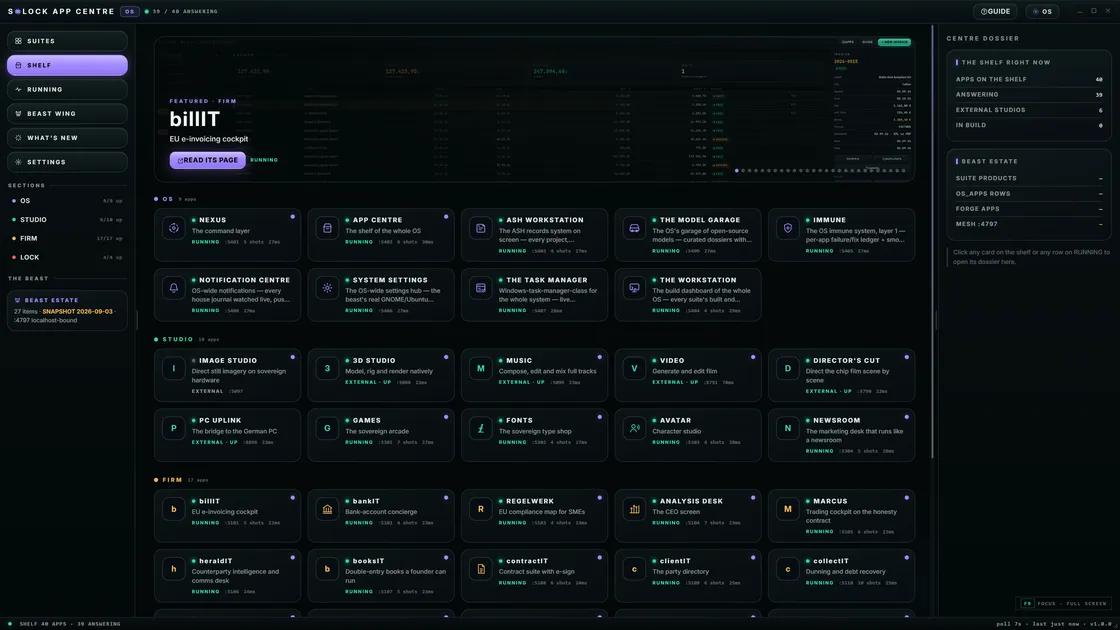
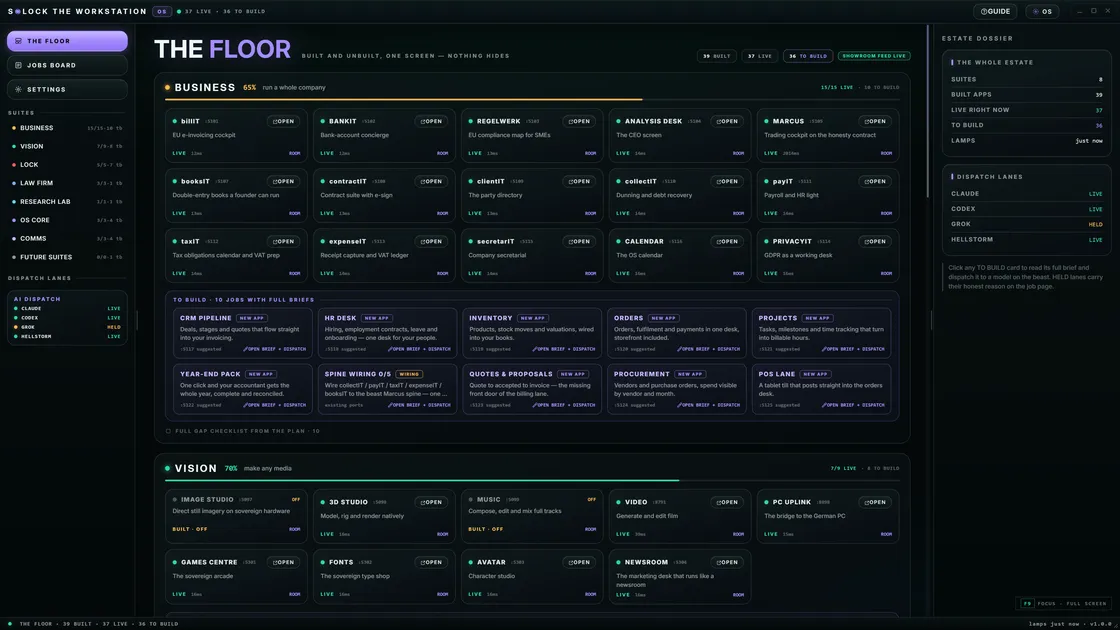
TRANSL8 takes its first paying customer. The invoicing engine, the inbox marshal, the 3D forge — thirteen products grow from internal organs into things other people can hold. The lab becomes a company without ever becoming a cloud.
One organism. Next: one image.
Today the civilisation runs as a single system on the founding machine. The work underway is compression: everything it is, pressed onto a disk that boots on yours. That is the product you are early to.
Built by one operator — because the machine carried the rest of the payroll.